We take great pride in raising the healthiest fowl here at Healthy Jumper Farm that we possibly can. We spend 7 days a week tending to the birds. Below, you will find a little bit of insight into how we do things here at Healthy Jumper Farm.
Incubating and Hatching
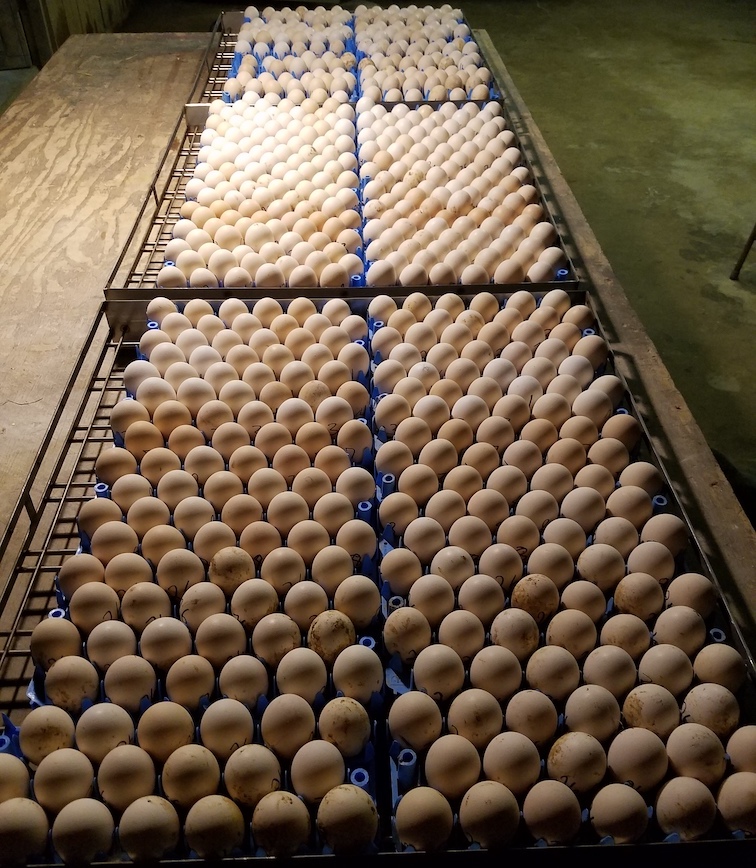
After a long workday during breeding season, we gather eggs from individual breeding pens and label each with a unique number to prevent mix-ups. These eggs are then stored safely, being tilted from side to side daily to enhance hatching success. It’s important to avoid cleaning dirt off the eggs, as this can block their pores and decrease the chance of successful hatching. Once the eggs are prepared for incubation, we transfer them to an automatic turning incubator set at 100 degrees Fahrenheit, beginning the 21-day incubation process. We have a barn equipped with three large incubators for this purpose. When placing the eggs in the incubators, they should be positioned with the pointed end down because there’s an air pocket at the broader end that facilitates the embryo’s breathing. Incorrect positioning will prevent hatching. On the 18th day, we remove the eggs from the incubator for candling.
To candle eggs using a flashlight, position your hand around the egg and direct the flashlight beam through it to determine if it’s fertile. When light cannot pass through the egg, it indicates fertility. Conversely, if the egg illuminates brightly, it is infertile and should be discarded.
Currently, we return all fertile eggs to the incubator, placing each in separate sections corresponding to the number on the egg. This system prevents mixing our different bloodlines during hatching. On the 21st day of incubation, we retrieve the chicks from the incubator and apply unique markings based on their bloodline. Once marked, we transfer them to the indoor baby brooder area in the barn, which is equipped with heaters and preferably red light bulbs to prevent pecking behavior. Here, they will remain for approximately three weeks.
Vaccinations
Implementing a thorough vaccination strategy is crucial in the game fowl industry due to the variety of diseases that can affect the birds. We typically vaccinate our chicks by the time they are two weeks old. This timing allows us to move them from brooders to the range area sooner, promoting optimal plumage development. It’s important to wait at least one week after vaccination before introducing the chicks to the range area. Among the diseases we vaccinate for are Pox, Newcastle, Marek’s, and Coryza. Pox, for instance, can initially appear as a scab around a chick’s mouth or eyes. If unchecked, it can rapidly spread to many other chicks within three days because they share the same water source. If you observe symptoms like this, it’s crucial to isolate the affected chick from the others until you can diagnose the issue and administer proper treatment.
Range Area
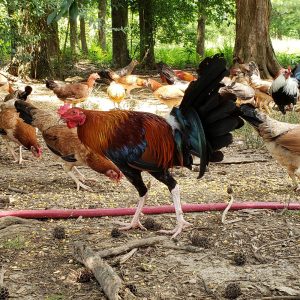
Our range area is abundant with grass, trees, and shrubs, providing the chicks plenty of space to roam freely and perch. Allowing your birds to range is one of the healthiest practices for them. It’s essential to ensure they have fresh water available daily. We prefer to feed them pellets with at least 18% protein daily, complemented with scratch grain on three days of the week. Additionally, administering a good wormer and vitamins at least twice a month is advisable. We like using a powdered, water-soluble mixture for three consecutive days, then switching back to fresh water. By following this method, you should have no difficulty raising exceptionally healthy brood fowl.